
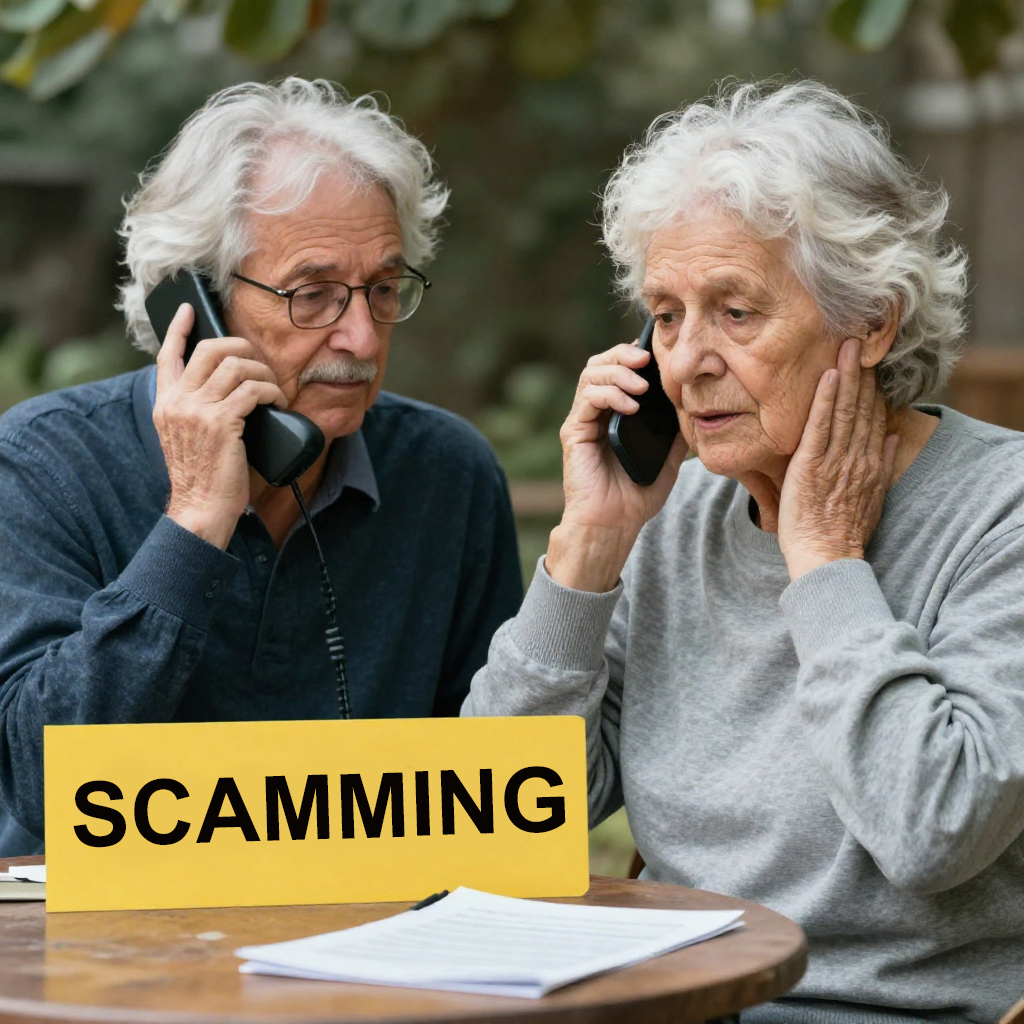
Learn How To Protect Older People From Scams
Many family carers worry about scams happening to their loved one’s. Older people are often trusting by nature, and they tend to believe that the people who contact them, whether by phone, letter, email, or in person, are genuine and decent. This makes them especially vulnerable to scams targeting older adults.
When my mother watches programmes about scamming on TV, she often asks: “Why do they do that? How can they do that? How can they get my number?” Like many older people, she finds it difficult to understand what scamming really is, how it works, especially online and what she can do to protect herself.
It’s also hard for her not to answer the phone or engage in conversation with someone she doesn’t know. Many older adults grew up in a time when a friendly phone call usually came from a friendly person, so it feels natural to pick up the phone and chat. But today’s digital world is very different, and scammers take advantage of that trust.
By understanding the risks, spotting the signs early on, and learning how to protect older people from scams, families and carers can play a vital role in keeping older adults safe, confident, and protected.
A carer may be one of the first people to notice a change. For example, the older person may become upset after answering the phone. They may have a pile of letters on their kitchen table demanding payments, or they may mention that someone official called to say that money must be moved from their bank immediately.
Scams targeting older people are a growing concern in the UK. The Office for National Statistics estimated 4.4 million fraud incidents took place in England and Wales in the year ending December 2025.
Around 3.2 million scams older people fall for involved a loss. Fraud levels were 30% higher than March 2017. Age UK has also reported that four people aged 50 or over, are scammed every minute in England and Wales.
This blog post aims to provide simple, clear information about, what scamming is, the common types of scams older people are targeted with, providing practical tips to help prevent older people from being scammed, and what to do if an older adult has been scammed.

What Is A Scam?
A scam is a dishonest attempt to take money, personal details or belongings, bank access, or property. A scammer may pretend to be from a bank, the police, a utility company, HMRC, an insurance company, or a trusted service provider.
Scammers come in all shapes and sizes, and they use many different tactics to catch people off guard. Some criminals make convincing phone calls, while others send texts, emails, or official‑looking letters designed to create worry or urgency.
Scammers can also turn up at the front door pretending to be tradespeople, charity workers, or even government officials. Sometimes the risk comes from closer to home, an older person may face financial abuse from someone they know or trust.
Understanding these different types of scams is an important first step in protecting older people from fraud and helping them feel confident and safe.
Being scammed does not mean a person was careless. Many scams are carefully planned and can sound very convincing. A person may feel ashamed after sending money or sharing their personal details. Avoid blame and focus on the safety and security of the person that has been scammed.
Scammers often put pressure on older people to get them to do what they want them to do. They may try to make a person feel rushed, frightened, or unable to speak to someone they trust. Recognising these tactics can help families and carers respond calmly and help to guide the older person through the next safe steps.

Which Scams Affect Older People Most Often?
There isn’t one single elderly scam in the UK, although bank and credit account fraud are the most common scams that older people fall for. There is an estimated 2.7 million incidents in the year ending December 2025, a 15% increase from the previous year. Phone contact also needs close attention as many phone scams targeting older people start with a caller claiming to solve a problem.
The caller may say there is an unusual bank activity, unpaid bill, a computer fault, or urgent repair work. The aim is to create panic before the person has time to check the claim.

Helping An Older Person With Dementia Stay Safe From Scams
Dementia may affect memory, judgement, communication, and confidence with money. An older adult in cognitive decline or with dementia may forget that they have already paid a bill, respond to the same letter several times, or trust a caller who sounds friendly. The aim is to reduce risk while treating the person with dignity.
Families and carers can take practical steps during regular visits. Keep a simple “check before paying” tray for new bills, prize letters, insurance offers, and renewal notices.
With the older person’s permission, suspicious letters can be checked with a relative, care supervisor, or trusted person before any payment is made.
Place a large card beside the phone with three instructions:
1. Hang up
2. Do not share any codes
3. Call a trusted family member or person.
Add the bank scam number159 and the person’s agreed emergency contacts. Help an older adult save trusted numbers in their phone, such as their bank, GP, close relatives, care agency, and utility companies, or if they can’t use a mobile phone, have a card with these number on next to their landline phone.
Only use numbers from bank cards, statements, or official websites. With permission, register the person with the Telephone Preference Service and ask the phone provider for call-blocking options. A call blocker can reduce repeated nuisance calls. Ask the person to keep bank cards, cheque books, bills, and identity documents in one safe place. Shred old statements before disposal.
Agree on a family password for urgent requests. If someone sends a message claiming to be a relative with a new number, ask for the password and call the relative using their usual number. Watch for unusual parcels, repeated prize letters, new direct debits, unfamiliar apps, missing cash, or sudden worry after the phone rings.
With the older person’s permission, support them during a call with the bank. Ask the bank to explain spending limits, payment alerts, card controls, and trusted-contact options. Speak with the family or the person holding lasting power of attorney where this is recorded in the care plan. If an older person wants to send money after an unexpected call, ask them to pause. You might say, “Let us check this first. A genuine company will allow time for a second call.”
One poor decision does not mean the person has lost the ability to make choices. If the person appears confused, frightened, or under pressure, record the concern. Carers should follow their care agency’s safeguarding process, and inform the older person’s family.

Top 10 Common Types Of Scams Targeting Older People
Scams can take many forms, and some are harder to recognise than others. A caller may sound professional, a letter may appear official, or a visitor may seem friendly and helpful.
Families and carers can help an older person by knowing the warning signs which can help you notice concerns early and help an older person to take a pause, before money or personal details are shared.
1. Bank Transfer Scams
A criminal may pretend to call from a bank. They may claim that a bank account is at risk. They may ask for a PIN, password, one-time security code, or card details.
Bank transfer scams happen when a scammer tricks you into sending money by bank payment, by phone, mobile or online, to a bank account that they control. They may ask the older adult to move money into a ‘so-called safe account’. Some even arrange for a courier to collect a bank card.
A genuine bank will never ask a customer to share a PIN or move money into a special account after an unexpected call. If a call seems suspicious, end it immediately. Stop Scams UK-Crimestoppers advises people to hang up and dial 159, this connects customers with their bank through a safer route. It covers over 99% of UK retail bank current accounts.
An older person can be supported by having the 159 number in their phone or nearby for immediate access, as well as a short reminder to stop, hang up and call 159.
2. Text and Email Scams – Smishing & Phishing
A scam text (known as smishing), may claim that a parcel cannot be delivered, a bill is overdue, or a bank account is blocked. Another common message comes from a supposed child or relative using a new number. It may ask for money urgently. Never reply to any unknown text message or click on any links in text messages.
Email scams often copy familiar company logos and can look almost identical. A fake message may mention HMRC, TV Licensing, an energy provider, or a bank or even the police. It may contain a link to a false website that collects payment details or passwords.
To prevent scams on older people, there’s a simple rule – do not press any links in unexpected messages. Use a trusted phone number or type the company website address separately into a safe browser. Report any suspicious scam messages to text number 7726.
3. Letter and Postal Scams
Letters from scammers can be deeply worrying for an older person, especially when they mention debt or overdue bills. Some older people take official-looking post seriously, and criminals know this.
Postal scams may include fake prize wins, lottery claims, inheritance offers, pension benefits, charity appeals, subscription renewals, false invoices, or final warnings. A letter may ask for a small fee first. Once a person responds, further demands may follow.
Think Jessica is a registered charity that makes people aware of the danger, and financial implications, of scams which target people in their own homes. The charity warns that criminals may share victims’ details, leading to repeated scam mail.
4. Doorstep And Home -Service Scams
Doorstep scammers may claim to work for a utility company, the council, or a home-repair business. They may offer roof repairs, gutter cleaning, driveway work, double glazing, boiler cover, insulation, or home-security services.
If someone comes to your door, use the door chain if you have one, or speak through the door. Ask the visitor to leave written information through the letterbox. Refuse any requests for cash payments. Call the company using a trusted number to check that they work there before allowing entry. Call 999 if the visitor becomes threatening or refuses to leave, then call a neighbour or family member.
Some scammers may also claim that they’ve noticed a serious fault, water, gas, electrical, paving nearby, others use a low price, then demand a larger payment after starting poor-quality work. A scammer may use another person as a distraction to keep the older person talking at the door while the other person enters the home.
An older adult should never feel pressured to let a stranger inside or pay immediately. Ask callers to leave written information. A trusted person can check it later.
5. Insurance, Pension, And Investment Scams
A caller may offer car insurance, home insurance, appliance cover, pension advice, or an investment with high returns. Pressure is a warning sign, so is a promise that an offer ends within hours.
For pension or investment claims, the older adult should call the provider using an official number and check the company through the Financial Conduct Authority.
6. Delivery/Couriers Scams
Delivery scams are fake texts, emails or calls pretending to be from trusted couriers such as Royal Mail, DPD, Evri or even Amazon.
Their aim is to make you click a link, pay a small fee or share personal details, which can lead to stolen banking information or malware (bugs) on your device.
Common delivery scams include messages claiming you missed a parcel and must pay a small charge to rearrange delivery, unsolicited packages sent to boost fake online reviews, and fake couriers attempting to intercept high‑value items, such as expensive mobile phones, ordered using stolen details.
Understanding these scams helps families and carers to protect older people from fraud and keep them safe online, and at home.
7. Online Shopping Scams
Online shopping scams happen when criminals pose as genuine retailers or sellers to steal money and personal information. They often use fake or cloned websites, social media adverts, and offers that are too good to be true deals to lure people in.
Victims may pay for items that never arrive, receive counterfeit or faulty goods, or unknowingly share sensitive details through phishing emails or texts pretending to be trusted brands.
Scammers also create fake listings on auction or classified sites, sending false payment confirmations or pressuring buyers into unsafe bank transfers.
To stay safe, it’s important to check website links carefully, use secure payment methods like credit cards or PayPal, enable two‑step verification on accounts, and look for independent reviews on trusted platforms such as Trustpilot.
Understanding these online shopping scams helps families and carers protect older adults from fraud and help to keep them safe and confident when shopping online.
8. AI Voice Copy Scams – ‘Deep Fake’
There has been a worrying rise in phone scams using AI voice‑cloning technology to target older people. National Trading Standards has found that criminals are now cloning people’s voices and using the recordings to set up unauthorised direct debits over the phone.
These scams often begin with what seems like a harmless “lifestyle survey” call, but the real purpose is to gather detailed personal, health and financial information. Criminals then use this data to create AI‑generated voice clones that sound like the victim, allowing them to simulate consent and deceive banks or legitimate companies.
The stolen details are frequently passed on or sold to other scammers, who can set up payments without the person’s knowledge, leaving victims unaware that money is being taken. The safest response is to hang up immediately and avoid engaging in any conversation with unknown callers.
Families and carers should learn about and understand how these AI‑driven phone scams work to help to protect older adults and keeping them safe at home.
9. Official Copy Scams
These often involve fake websites, letters or emails that impersonate government departments or trusted public bodies, to trick people into paying high fees for documents or services that are free or much cheaper through genuine channels.
These scams often target tax government departments to create copycat government websites that mimic services like the DVLA or HM Passport Office, charging inflated prices for applications that are normally free or low‑cost.
Some scammers pose as authorised financial firms, using cloned names, logos and registration numbers to steal money. To stay safe, always check the website address carefully, genuine UK government services almost always use the .gov.uk domain.
Avoid clicking links in unsolicited messages, and never feel pressured to pay immediately; scammers rely on urgency, so take time to verify the sender through official contact details. Understanding these official copy scams helps families and carers protect older adults from unnecessary costs and fraud.
10. Family, Friend, And Romance Scams
Scams and financial abuse can involve a relative, friend, neighbour, or even a paid carer. Warning signs include missing cash, unusual withdrawals, new direct debits, sudden gifts, pressure to hand over a bank card, or pressure to change a will.
An older person may seem nervous around one person or may stop speaking freely when that person is present. Carers and scam prevention work often overlap with safeguarding. Concerns should be recorded and reported through the care agency’s safeguarding process.
A text may say, “Mum, I lost my phone,” followed by a request for money. A family password can stop this type of scam. If the sender cannot give the agreed word, call the relative on their usual number.
Dating and internet scams can be painful. A criminal may build trust over weeks or months. They may avoid video calls, claim to work abroad, ask for secrecy, or request money for an emergency.
If an older person mentions an online friend asking for payments, Respond with kindness and empathy. A harsh reaction may make the older person less likely to share further concerns.

Top Tips On How to Help To Prevent Scams On Elderly People
1. Bank Scam
What the scammer might say – ‘’You must transfer quickly otherwise it will cause problems with the bank’
What you should do – hang up, wait a few minutes then, dial 159, it’s like the 999 for bank account fraud. Speak directly to the bank.
2. Text and Email Scam – Smishing & Phishing
What the scammer might say – ”you have a delivery but there’s an extra charge as the postage is not sufficient.”
What you should do – Stop. Do not reply or click on any links or attachments. Text 7726 (it’s free), or email the National Cyber Security Centre (NCSC) at report@phishing.gov.uk.
If you’ve lost money report the report to the police using their 24/7 online service Action Fraud or call 0300123 2040. If you’ve clicked on any links change your password, contact the bank and run a virus scan on your computer or phone.
3. Letter or Postal Scam
What the scammer might say – you’ve won a prize, your pension is at risk of being stopped, you owe council tax or an unpaid utility bill.
What you should do – file an official report with Action Fraud online or report the scam by phone on 0300 123 2040 and call the police on 101.
4. Doorstep or Home Services Scam
What the scammer might say – we’re from the Council and need to talk to you about you Council Tax, we’ve come to fix your boiler, there’s a problem with the water in your area, so we need to check your pipes.
What You Should do – do not let strangers or uninvited people into your home. Call 999 or 101 and report them to the police. Call a family member or a close friend, so that they can support you.
5. Insurance, Investments and Pension Scams
What the scammer might say – you’re told to act immediately or you’ll miss out on a lifetime offer, or they offer guaranteed high interest return on your savings without any risk or offer an insurance quote that is much cheaper than anywhere else. You may even be asked to pay via cryptocurrency or by direct wire transfer.
What you should do – use the Financial Services Authority (FSA) Scam Smart tool to check out if the company exists and are legal. If you think you’ve be scammed report it to Action Fraud and call the police on 101.
6. Delivery/Courier Fraud Scam
What the scammer might say -we’ve received your parcel but there’s a small fee to pay before we can delivery this to you. Click here to pay.
What you should do – do not click on any links. Contact the organisation directly using contact details you know are correct, such as those on official websites, the back of your card or by calling 159 for your bank. Don’t trust the number displayed on your phone it may be the scammer’s number disguised as an official or a fake company number.
You can report the suspected scam calls by sending a text to 7726 with the word ‘Call’ followed by the caller’s number. If you think you have been a victim of fraud contact Report Fraud on 0300 123 2040 or via their website reportfraud.police.uk.
7. Online Shopping Scams
What the scammer might say – Get 50% OFF today only, buy now!
What you should do – make sure the website you’re buying from is genuine by typing the address yourself and checking the spelling, fake sites often change just one or two letters. Look into the seller’s history and remember that a “.co.uk” domain doesn’t guarantee the business is based in the UK, so check for a real address and phone number by typing this in yourself.
Avoid making payments over public or unsecured WiFi. When you’re ready to pay, confirm the site is secure, the ‘padlock icon’ should appear in the browser’s address bar, not on the page itself, and the web address should begin with https://, where the “s” stands for secure. Report to the police on 101, if you have been scammed.
8. AI Voice copy scams
What the scammer might do – the scammer may try to impersonate your voice or how you look to steal your identity and your personal information
What you should do – protect your family by agreeing on a safe word to confirm real emergencies and showing them deepfake scam examples, so they know what to watch for. Treat any urgent request for money or personal details as suspicious, and do not make any payments. Learn to spot visual or audio glitches like odd timing or unnatural movements. Call a trusted family member directly before responding to anything that feels off.
9. Official Scams
What the scammers might say -That your bank account is at risk and you need to move your money to a ‘safe account’
What you should do – to stop official-sounding scammers (e.g., individuals impersonating the government, police, or your bank), your strongest defense is to stop, hang up, and verify using an independently trusted number. Never share personal information or send money on the spot, as legitimate authorities will never rush or threaten you.
10. Friend & Romance Scammer
What the scammer might say – ”I’ve never felt this way before” or “You’re the only one for me”
What you should do – Avoid sending money to someone you’ve never met or have only met a few times, especially if they’re declaring strong feelings for you after only a few conversations.
What To Record When Suspecting A Scam On Older Adults

My Final Thoughts
Scams targeting older people are becoming more frequent, more sophisticated, and more frightening, especially for those living alone or far away from family. I see it with my own older relatives, who receive multiple scam calls a day. That’s why simple, visible reminders can make such an important difference, to help to remind your loved ones, not to respond to any calls, text, letters or emails they may receive from people they do not know or do not expect to receive.
Every older person should have a clear reminder somewhere they see daily. Hang up, don’t give any codes or numbers, and call someone you trust. A sticker on the fridge, by the phone, or on the inside of the front door can act as a lifesaving pause in a moment of pressure.
Sadly, scammers know exactly who to target. They prey on trust, kindness, and vulnerability, qualities many older people naturally hold. And too often, they stay one step ahead of banks, policies, and the systems meant to protect us. The emotional impact of being scammed, can be just as damaging as the financial loss.
This is where families and carers play a vital role. Families and consistent carers who have a strong relationship with an older person means that that they are trusted enough, so that they feel safe enough to speak up when something feels wrong. A calm, respectful response can stop a scam in its tracks.
Helping someone pause and take a moment to check the claim or demand can make all the difference. When families or carers encourage an older person to slow down, verify what they’ve been told, contact their bank, and speak to the right trusted people, they can often stop harm before it begins. In many cases, preventing a scam starts with a single calm, caring conversation, the kind that reminds someone they’re not alone and that they can always turn to a person they trust before acting.
By helping someone pause, check the claim, contact their bank, and speak to the right people, families and carers can help prevent financial and emotional harm before it happens.